
Introduction
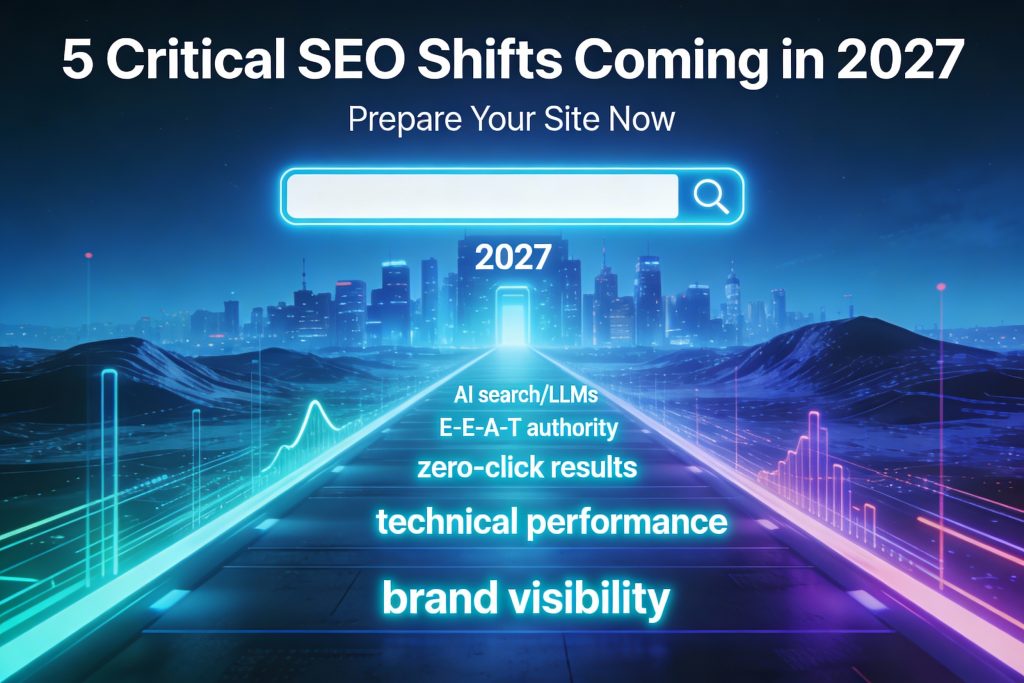
The SEO landscape is transforming faster than ever before. As we approach 2027, Google’s integration of artificial intelligence, evolving ranking algorithms, and new user behavior patterns are fundamentally reshaping how websites achieve visibility in search results. The strategies that worked in 2020—keyword stuffing, traditional link building, and thin content—are no longer enough. Today, SEO is about trust, authenticity, and delivering real value to users. If you’re not preparing now for the 2027 SEO shifts, your rankings could face significant challenges. This comprehensive guide explores the five most critical changes coming in 2027 and provides actionable strategies to future-proof your website.
Shift 1: AI Overviews Dominate Search Results – Make Your Content AI-Citation Ready
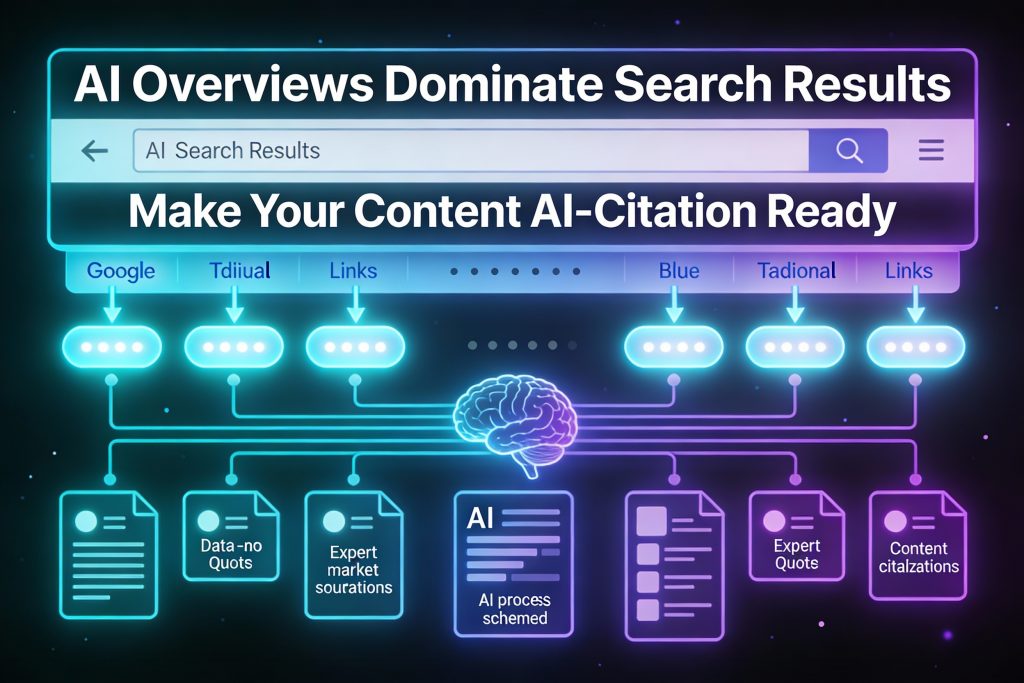
Google AI Overviews now appear in over 60% of search results (as of December 2025). By 2027, this figure will be substantially higher. These AI-generated summaries appear at the very top of search pages, immediately answering user questions without requiring a click to your website.
The Challenge: Fewer organic clicks from search traffic.
The Opportunity: If your content is cited in the AI Overview, you gain massive visibility and credibility—essentially a free recommendation from Google’s AI.
To be featured in AI Overviews, your content must be structured, fact-checked, and machine-readable. This means:
- Use schema markup (structured data) on every page to help Google’s AI understand and cite your content
- Write clear, concise answers to common questions in your niche
- Format content for readability: use short paragraphs, bullet points, and numbered lists
- Cite authoritative sources to support your claims
- Verify facts with primary sources and be transparent about your research
If you’re creating SEO content, use tools like the Meta Tags Analyzer from SEOFreeGenius to check that your meta descriptions and titles are optimized for both search results and AI summaries. Clear, benefit-driven meta tags make it more likely that AI systems will extract and cite your content.
Real-World Implementation For every product, tool, or guide on your website, structure the content around answering the user’s core question in the first 100–150 words. Then provide deeper context and examples. This approach aligns perfectly with how AI Overviews extract and summarize information.
Shift 2: Trust and E-E-A-T Replace Backlinks as the Primary Ranking Factor

Large language models (LLMs) and Google’s search systems no longer evaluate websites based solely on the quantity of backlinks. Instead, they prioritize E-E-A-T: Experience, Expertise, Authoritativeness, and Trustworthiness.
By 2027, the ranking dynamics will shift dramatically:
| Old SEO Approach (2020) | New SEO Approach (2027) |
| Backlinks from any site | Author authority and credibility |
| Keyword density and repetition | Semantic optimization and context |
| Thin content with keywords | Deep, research-backed content |
| Paid link schemes | Genuine user engagement signals |
Google’s algorithm now asks:
- Who wrote this? Is there a verified author profile?
- Is it accurate? Are claims supported by evidence?
- Do people engage? Do users share, comment, and spend time on this content?
- Is it trustworthy? Does the author demonstrate real expertise?
- Create detailed author bios on your About page and on individual article pages. Include credentials, years of experience, and what makes you authoritative in your niche.
- Add bylines to all content with author names, photos, and links to author pages or social profiles.
- Publish original research and data whenever possible. Use tools like the Plagiarism Checker from SEOFreeGenius to ensure all content is original and properly attributed.
- Cite credible sources internally and externally. Link to peer-reviewed studies, government reports, and established industry authorities.
- Build a consistent brand presence across social media, industry directories, and external mentions. The more your brand appears in authoritative places, the higher your E-E-A-T score—which you can monitor using our [Domain Authority Checker].
- Update content regularly to reflect the latest data and best practices. Search engines reward websites that maintain fresh, current information.
Why This Matters for 2027 Websites that demonstrate expertise and trustworthiness will consistently outrank thin, keyword-focused competitors—no matter how many backlinks they have. This shift levels the playing field for small businesses and specialists who have genuine expertise but limited link-building budgets.
Shift 3: Semantic Search and Entity-Based Optimization Become Core

By 2027, Google’s AI systems will understand not just keywords, but concepts, relationships, and intent. This is powered by LLMs and semantic understanding. Your website will be ranked based on how well it addresses the broader topic and its relationship to connected entities (people, brands, organizations, concepts).
What this means: A page that ranks for “free plagiarism checker” must also clearly explain what plagiarism is, why it matters, how to use the checker, when to use it, and how it differs from copywriting tools. The depth of topical coverage and semantic coherence matters far more than keyword frequency.
Visual search is growing. Ensure your images are optimized and fast with our [Page Size Checker].
Topic Clusters and Internal Linking: Instead of isolated blog posts, create interconnected content clusters. For example:
- Pillar page: “Complete Guide to Content Quality and Plagiarism Detection”
- Cluster articles: “How to Check for Plagiarism,” “Plagiarism vs. Paraphrasing,” “AI-Generated Content Detection”
- Tool pages: Direct users to your Plagiarism Checker and Word Counter for hands-on experience
Internal links between these pages signal to Google’s AI that your site comprehensively covers the topic from multiple angles.
Entity Association: Make sure your brand is clearly associated with specific entities in your niche. If you offer SEO tools, your website should be consistently mentioned alongside other SEO concepts, tools, and authorities. Use Google Search Console and external tools to monitor how your brand is mentioned and associated.
Structured Data (Schema Markup): Use schema markup to explicitly define entities and relationships on your pages. This helps LLMs and AI systems understand your content’s context: {
“@context”: “https://schema.org“,
“@type”: “SoftwareApplication”,
“name”: “Plagiarism Checker”,
“description”: “Free online plagiarism detection tool”,
“url”: “https://seofreegenius.com/plagiarism-checker/“,
“applicationCategory”: “DesktopApplication”
}
Shift 4: Page Experience and Core Web Vitals Become Non-Negotiable
The Speed and Usability Revolution
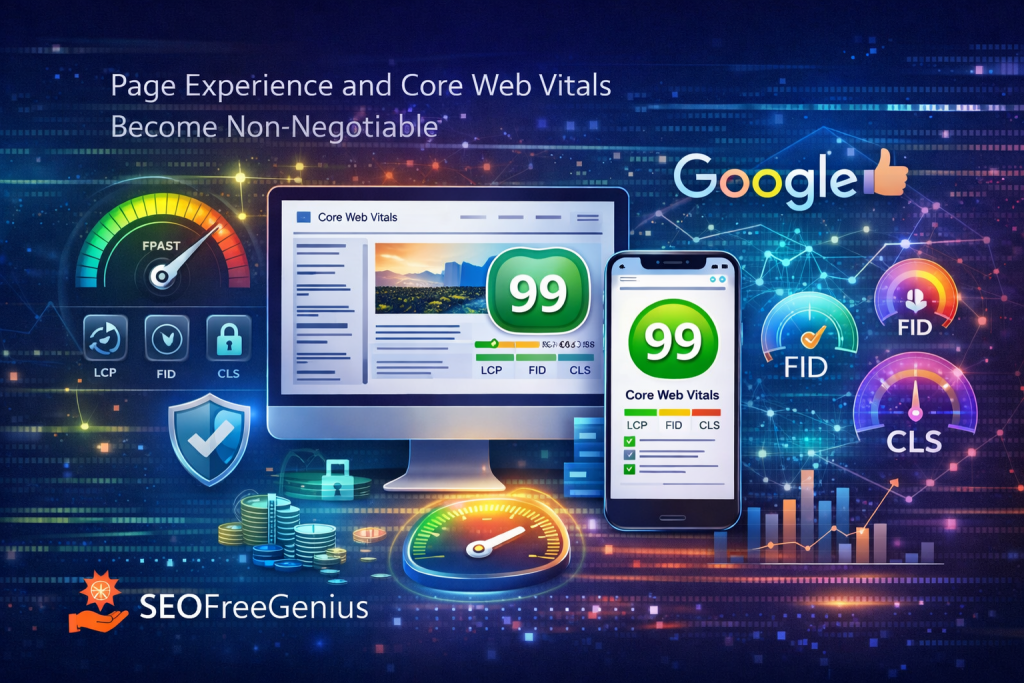
Page experience signals—including Core Web Vitals, mobile-friendliness, and visual stability—are already important ranking factors. By 2027, they will be even more critical as Google continues to prioritize fast, user-friendly websites.
Core Web Vitals measure:
- Largest Contentful Paint (LCP): How fast your main content loads (target: under 2.5 seconds)
- First Input Delay (FID): How quickly your page responds to user interaction (target: under 100 milliseconds)
- Cumulative Layout Shift (CLS): How stable your layout is (target: under 0.1)
Websites that fail to meet these standards will see ranking penalties, especially in competitive niches.
- Use a fast hosting provider and CDN to deliver content quickly globally.
- Optimize images by compressing files, Don’t guess—check your total asset weight with our [Page Size Checker] to ensure you stay under the limit.
- Minimize JavaScript that blocks page rendering. Defer non-critical scripts.
- Enable browser caching to reduce load times for returning visitors.
- Test mobile responsiveness across all devices. Use the Webpage Screen Resolution Simulator from SEOFreeGenius to see how your site looks on different devices and screen sizes.
- Avoid intrusive interstitials (popups) that block content, especially on mobile. Google penalizes pages where popups appear before users can see the main content.
- Use Google Search Console to identify issues, and verify fixes instantly with our [Page Speed Insights Checker].
Real Impact Research shows that page speed directly impacts not just rankings, but revenue. A one-second delay in page load time can reduce conversions by 7%. By 2027, websites with slow page experience will lose both search visibility and user trust.
Shift 5: AI-Generated Content Must Be Human-Verified and Original Value-Driven

AI tools like ChatGPT and Claude are revolutionizing content creation. By 2027, AI-generated content will be widespread across the web. However, Google will not reward low-quality, AI-generated content. The ranking advantage will go to websites that:
- Use AI as a tool, not a replacement for human expertise
- Fact-check and verify all AI-generated claims
- Add original insights based on real experience
- Disclose AI usage transparently (where required by law)
- Maintain editorial standards and human review processes
- Draft long-form content with AI tools, then heavily edit and fact-check.
- Generate multiple content angles for the same topic using AI, then select and refine the best version.
- Create content outlines quickly to accelerate your planning process.
- Analyze competitor content faster to identify gaps you can fill with original research.
- Use AI for data analysis: Upload datasets and ask AI systems to identify trends and insights—then verify those insights with the actual data.
- ❌ Publish AI-generated content without human review and editing
- ❌ Use AI to create hundreds of thin, similar pages
- ❌ Rely solely on AI for fact-checking
- ❌ Ignore plagiarism detection—use the Plagiarism Checker to verify that AI content is original
- ❌ Create AI-generated content just to fill pages for keyword ranking
The Bottom Line By 2027, human expertise + AI efficiency = competitive advantage. Websites that combine AI-generated drafts with human editing, original insights, and fact-checking will outrank sites with pure AI content every time.
Preparing Your Site: 2027 SEO Action Plan
- [ ] Audit your Core Web Vitals using Google Search Console
- [ ] Fix any LCP, FID, or CLS issues; prioritize pages with high traffic
- [ ] Ensure HTTPS is enabled across your entire site
- [ ] Submit an XML sitemap to Google Search Console
- [ ] Test mobile responsiveness across devices using the Webpage Screen Resolution Simulator
- [ ] Use the Robots.txt Generator to create a proper robots.txt file that guides Googlebot to your most important pages
- [ ] Review your site structure and internal links using the Website Links Count Checker to identify broken or missing connections
- [ ] Audit your existing content for accuracy and source citations; update with recent data
- [ ] Add detailed author bios and bylines to all key content
- [ ] Create comprehensive pillar pages that cover topics in depth
- [ ] Use the Meta Tags Analyzer to optimize all title tags and meta descriptions for clarity and keyword relevance
- [ ] Check all content for plagiarism and originality using the Plagiarism Checker from SEOFreeGenius
- [ ] Implement schema markup (structured data) on your homepage, tool pages, and key blog posts
- [ ] Verify author credentials and create author pages linking to your About section
Month 3: Authority and Optimization
- [ ] Conduct competitive analysis on 3–5 competitors in your niche to identify content gaps
- [ ] Create 3–5 long-form, authoritative guides that address topics your competitors miss
- [ ] Use the Word Counter tool to ensure your content meets length requirements (typically 1,500–3,000 words for comprehensive guides)
- [ ] Set up a content update schedule to refresh key pages quarterly
- [ ] Build internal linking between related content using anchor text that reflects semantic relationships
- [ ] Monitor Search Console monthly to identify underperforming pages and opportunities
- [ ] Identify and fix broken links on your website using the Broken Links Finder
Month 4+: Continuous Improvement
- [ ] Monitor your Google Search Console Performance report weekly
- [ ] Track your ranking positions for target keywords
- [ ] Analyze user engagement metrics (time on page, bounce rate, conversions)
- [ ] Update content based on latest data and industry developments
- [ ] Build backlinks through authentic outreach to relevant websites
- [ ] Test and optimize for AI Overviews by structuring content for AI citation
- [ ] Conduct quarterly audits of your site’s Core Web Vitals, E-E-A-T signals, and content freshness
FAQs: 2027 SEO Questions Answered
Q: Will backlinks still matter in 2027?
A: Yes, but they will matter significantly less than they do today. Author authority, entity-based trust, and engagement metrics will be more important than the raw number of backlinks. Quality over quantity becomes even more critical.
Q: What is the biggest SEO ranking factor in 2027?
A: Trust. Google’s systems will ask: Who wrote this? Is it accurate? Do people engage with it? Websites that demonstrate E-E-A-T (Experience, Expertise, Authoritativeness, Trustworthiness) will dominate search results.
Q: Can AI-generated content rank in 2027?
A: Yes, if it is human-edited, fact-checked, and delivers unique value. Google rewards authenticity and penalizes low-quality automation. The key is combining AI efficiency with human expertise and verification.
Q: How do I optimize for AI Overviews?
A: Write clear, structured answers to common questions. Use schema markup, cite authoritative sources, and format content for readability (short paragraphs, bullet points, numbered lists). Make sure your meta descriptions are compelling and accurate.
Q: Should I hire an SEO agency or do it myself?
A: The fundamentals of SEO haven’t changed: write helpful content for people first, optimize for search engines second, and build genuine authority. You can start with free tools like those from SEOFreeGenius to audit your site, analyze competitors, and optimize your pages. An agency can accelerate your progress, but consistent, strategic work will get results.
Q: How often should I update my content? A: Update your most important pages (those with high traffic and revenue impact) at least quarterly. Add fresh data, cite recent sources, and ensure information is current. Monthly updates for evergreen content like tool guides and how-to articles are ideal.
Conclusion: Start Preparing Today
The five SEO shifts coming in 2027—AI Overviews, trust-based ranking, semantic optimization, page experience, and human-verified AI content—require action now. Websites that proactively prepare will maintain or grow their organic traffic. Those that ignore these changes will see rankings decline.
Your 2027 SEO strategy should focus on:
- User value first: Write for people, not search engines
- Authentic authority: Demonstrate expertise, experience, and trustworthiness
- Structured information: Use schema markup and clear formatting
- Fast, mobile-friendly experience: Invest in Core Web Vitals and page speed
- Original, verified content: Use AI as a tool, but maintain human oversight and fact-checking
Start with the technical foundation (Core Web Vitals and site speed), then move to building authentic, trust-based content and authority. Use free tools like the Meta Tags Analyzer, Plagiarism Checker, and Broken Links Finder from SEOFreeGenius to audit your current progress. The future of SEO rewards honest work, authentic expertise, and genuine value. If you commit to these principles now, 2027 will bring growth, not decline.