
1. Generative Engine Optimization (GEO) Is the New SEO
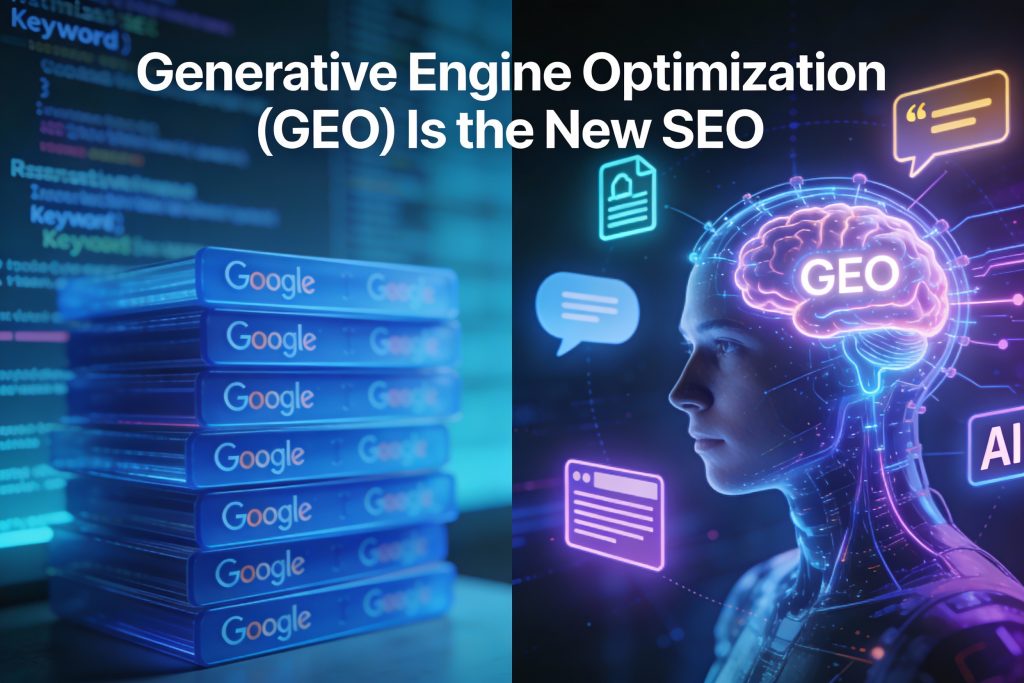
For years, SEO meant optimizing to rank in lists of blue links. But in 2026, the game has completely changed. Google’s AI Overviews, ChatGPT answers, and Perplexity summaries are rewriting how users find information—and reshaping where your content needs to appear.
What’s Changed:
AI search engines don’t just link to your content; they synthesize answers by citing multiple sources. This means you’re no longer competing for position one—you’re competing to be mentioned and cited within AI-generated answers. According to recent industry analysis, this shift has already caused some websites to lose up to 25% of their organic traffic if they weren’t prepared.
The rise of zero-click searches means users get answers without ever clicking through to your site. Google AI Overviews now appear above traditional organic results, capturing attention first. Meanwhile, ChatGPT users ask complex questions and expect synthesized answers from trusted sources—not ranking lists.
How to Adapt:
The new framework is called Generative Engine Optimization (GEO). Unlike traditional SEO, which focuses on keyword matching and ranking position, GEO emphasizes being cited as a credible source within AI-generated answers.
Start by restructuring your top-performing content with AI-readability in mind:
- Create comprehensive, research-grade content that provides unique insights rather than regurgitated information. AI tools actively avoid citing content that merely repackages what already exists; they cite original, well-researched pieces.
- Build clear content hierarchy with descriptive headings and logical organization. AI agents scan your page structure to understand context—confusing navigation means your content gets skipped.
- Optimize your code for AI bots: AI agents read your page’s code before they read the text. Use our [Meta Tag Generator] to create clean, structured tags that explicitly tell AI systems what your page is about.
- Prioritize multiple content formats: articles, infographics, videos, and data visualizations. Diverse formats increase the likelihood that AI systems will cite your content across different query types.
To monitor whether your content is being cited in AI systems, start tracking your brand mentions across ChatGPT, Perplexity, and Google AI. This is the new version of ranking tracking, and SEOFreeGenius provides free tools to help you monitor this evolution.
2. E-E-A-T Has Become the #1 Ranking Factor
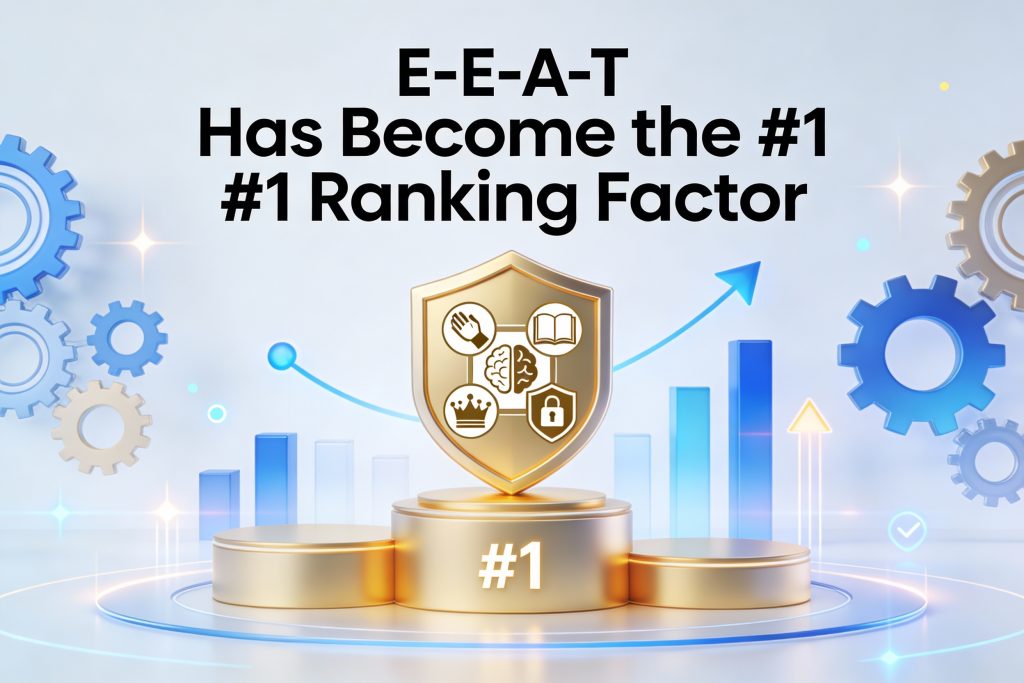
Google isn’t hiding its priorities anymore. Experience, Expertise, Authority, and Trustworthiness (E-E-A-T) have evolved from a guideline into the primary ranking signal—especially for competitive niches like finance, health, law, and business advice.
What’s Changed:
Google spent years emphasizing that you should write “for people first, not search engines.” But what that really meant was: establish yourself as a trustworthy authority. In 2026, Google’s algorithms are far more sophisticated at detecting genuine expertise versus thin, generic content written purely for rankings.
This is why auto-generated AI content consistently underperforms. Google’s systems can now distinguish between content created by someone with real credentials and experience versus content assembled from public information by an AI. According to search industry experts, human-written content consistently outranks AI-generated content when everything else is equal.
Authority isn’t a feeling; it’s a metric. Check your site’s current standing with our [Domain Authority Checker].
How to Adapt:
E-E-A-T improvement isn’t a quick fix—it requires strategic, long-term effort. But the payoff is substantial. Here’s the framework:
- Demonstrate real experience: Show your author’s credentials, background, and hands-on experience. Include author bios with professional history, relevant certifications, and publications. If you’re writing about SEO tools (like we do at SEOFreeGenius), make it clear you’ve actually used and tested these tools yourself.
- Build topical expertise: Don’t write one article about SEO and expect authority. Create clusters of comprehensive content around related topics. For example, combine articles on technical SEO for shared hosting, on-page SEO checklists, and how Google ranks websites to create a cohesive knowledge base.
- Earn and display trust signals: Collect user reviews, testimonials, and case studies. If your content has helped users improve their site rankings or traffic, let them say so. These social proof elements signal trustworthiness to both users and algorithms.
- Cite authoritative sources: Link to original research, government websites, and industry leaders. If you’re recommending a tool or tactic, cite where that recommendation comes from. This builds authority and improves user trust.
- Get mentioned by other authoritative sites: Reach out to industry publications, industry associations, and relevant blogs to earn mentions and backlinks. Backlinks remain important, but quality matters far more than quantity.
Pro Tip: Create a transparent “About the Author” section that builds credibility. Include professional credentials, years of experience, notable achievements, and why you’re qualified to write about this topic.
3. Content Freshness and Regular Updates Are Now Essential Ranking Factors
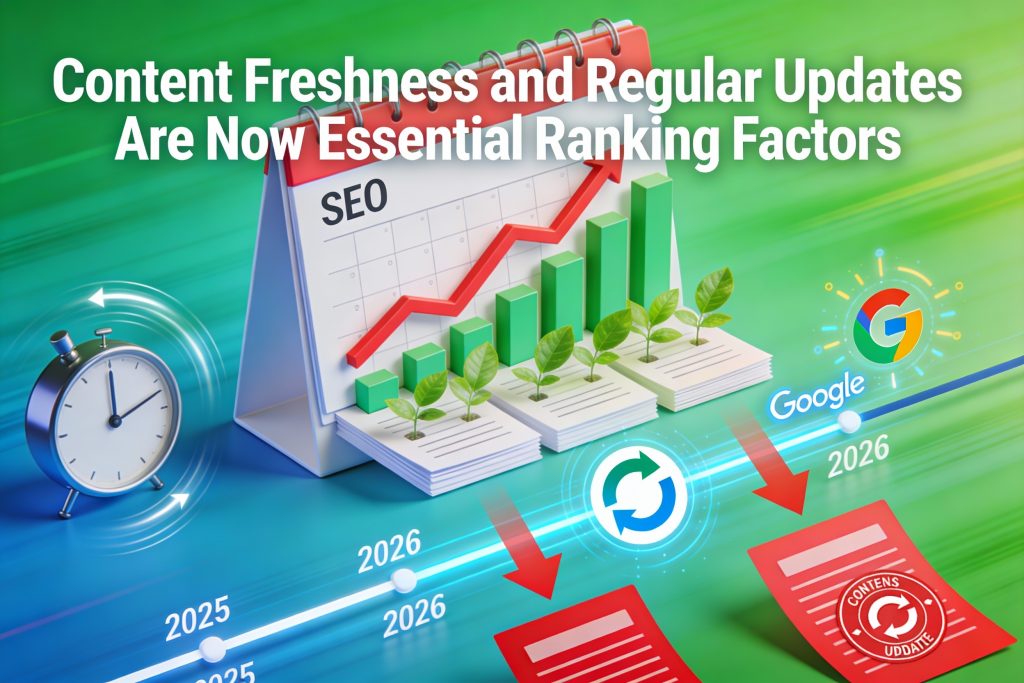
Static content is dead. Google’s algorithms now favor pages that are actively maintained, frequently updated, and reflect current information. This is a major shift from previous years, when evergreen content could rank indefinitely without modification.
What’s Changed:
Google has always valued fresh content for certain types of queries (like news searches). But starting in 2025 and intensifying through 2026, freshness has become a ranking factor for a much wider range of searches—especially those dealing with trends, advice, tools, and best practices.
Why? Because AI systems want to cite current, up-to-date information. Stale pages get deprioritized faster. If your blog post about “Top SEO Tools for 2024” isn’t updated with 2026 tools and trends, AI systems and Google both rate it as less valuable.
How to Adapt:
This requires a shift in how you manage content:
- Audit your existing content: Identify your top-ranking pages and check their last update date. If it’s over 6 months old (especially for trend-based content), it’s time to refresh.
- Build a content update calendar: Plan quarterly or monthly updates for your most important articles. This doesn’t mean a complete rewrite—add new sections, update statistics, refresh outdated tool recommendations, and improve outdated links.
- Add “Last Updated” dates: Include a visible last-updated timestamp on your pages. This signals to users and search engines that you’re actively maintaining the content.
- Expand evergreen content with fresh examples: Your foundational content (like SEO guides) can have evergreen value, but refresh examples, case studies, and tool recommendations regularly.
Monitor industry changes: Subscribe to Google’s official search quality rater guidelines and update your content when algorithms shift.
4. AI Search Readiness Requires Technical Excellence and Agentic Optimization
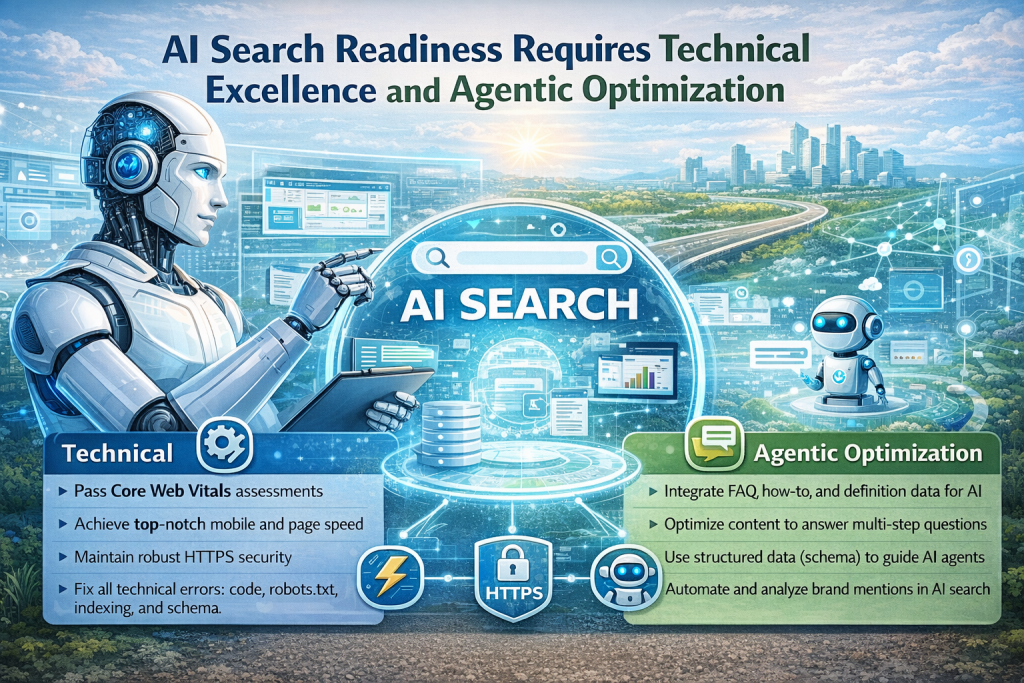
AI agents crawl the web differently than Googlebot. They need faster, more structured, and more complete information to function effectively. This means your technical SEO foundation needs to be stronger than ever.
What’s Changed:
Traditional technical SEO focused on making your site crawlable and indexable by Google. But AI agents—software systems that autonomously browse the web to answer user questions—have stricter requirements. They expect:
- Real-time crawlability: Sites that serve content behind paywalls, logins, or lazy-loading have minimal value to AI agents.
- Crystal-clear structure: Confusing navigation, poor heading hierarchy, or disorganized content confuses AI systems worse than it confuses human visitors.
- Fast, reliable performance: Page speed isn’t just a ranking factor—it directly affects whether AI agents can even access your content.
- Complete, structured data: Schema markup isn’t optional anymore; it’s how AI systems understand pricing, availability, reviews, and product details.
Don’t let slow load times kill your ranking. Run a full analysis with our [Page Speed Insights Checker] to find and fix bottlenecks.
How to Adapt:
Focus on the technical fundamentals that make your site “AI-ready”:
- Optimize page speed (especially mobile): Use Google PageSpeed Insights to identify bottlenecks. Enable caching, compress images with services like TinyPNG, defer non-critical JavaScript, and consider a CDN for faster global delivery.
- Ensure mobile-first performance: More than 60% of searches happen on mobile devices, and AI agents prioritize mobile versions. Test your site with Google’s mobile-friendly test and fix any issues.
- Implement comprehensive schema markup: Use structured data for products, articles, FAQs, recipes—whatever applies to your content. This helps AI systems extract and cite accurate information. Validate with Google’s Rich Results Test and enhance on-page elements using SEOFreeGenius Meta Tag Generator
- Remove login walls and paywalls from valuable content (or make key content accessible): AI agents can’t access content behind authentication. If you have premium content, ensure your core, high-value content is publicly available.
- Fix Crawlability issues: Use Google Search Console to identify pages Google can’t crawl. Check your robots.txt file (use our free robots.txt generator) to ensure you’re not blocking important content.
- Create clear content hierarchy: Structure your pages with a single H1, followed by logical H2s and H3s. This helps AI systems understand your page’s main topic and subtopics.
5. Brand Authority Trumps Generic Content in AI Search Results
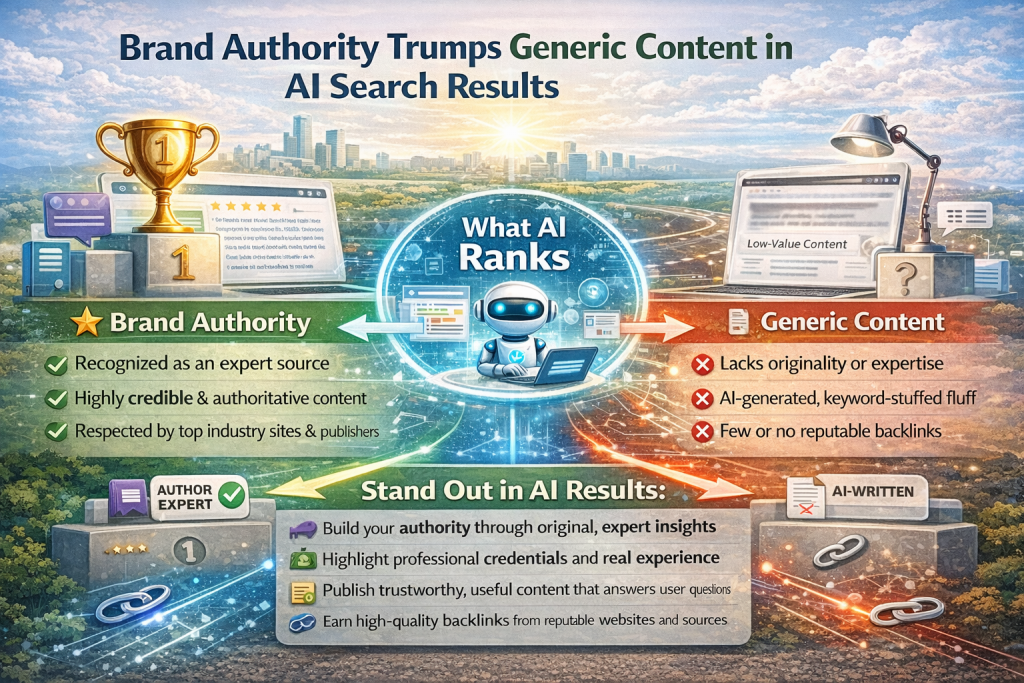
As AI search becomes dominant, generic, commodity content loses value. Brands that have established strong authority, distinctive voice, and unique perspectives now have a massive competitive advantage.
What’s Changed:
Here’s the harsh reality: if your content could be generated by an AI, it will be. AI systems prefer to cite brands they recognize and trust, not faceless content farms. This reverses a trend from previous SEO years, where you could often rank with thin, keyword-optimized content.
Now, the algorithm asks: “Should this information come from a recognized brand or trusted expert, or could an AI synthesize it from public information?” If it’s the latter, your generic content loses.
Meanwhile, branded search is exploding. Users now search directly for specific brands and tools they trust, rather than searching for generic solutions. This means building brand awareness and loyalty is now a direct SEO ranking factor.
How to Adapt:
Building brand authority is a medium-to-long-term play, but the time to start is now:
- Develop a distinctive brand voice: Don’t write like every other blog in your industry. Have a clear perspective, use consistent terminology, and let your personality shine through. At SEOFreeGenius, we make SEO accessible to small site owners—that’s our perspective, and it shapes everything we write.
- Create original, research-backed content: Conduct original research, surveys, or experiments. Publish findings that only you have discovered. AI systems heavily cite original research over regurgitated information.
- Build a content cluster around your core expertise: Don’t just write random blog posts. Create interconnected content that demonstrates deep expertise in a specific niche. Link between related articles, reference your own research, and show thought progression. Our beginner SEO cluster demonstrates this approach.
- Invest in brand visibility beyond search: Social media, industry partnerships, speaking engagements, and podcast appearances all build brand awareness. These don’t directly rank your site, but they increase brand searches, which do rank.
- Get mentioned in industry publications and directories: Reach out to blogs, news outlets, and resource pages in your niche. Aim for mentions (not just links—mentions of your brand name) across the web.
Use branded keywords strategically: Include your brand name naturally throughout your content. Make sure your brand name appears in title tags, meta descriptions, and H1 tags where contextually appropriate.
Your 2026 SEO Roadmap: Putting It All Together
These five changes aren’t separate—they’re interconnected. Here’s how to prioritize:
Month 1-2: Foundation
- Audit your technical SEO with Google Search Console
- Implement schema markup for your most important pages using Google’s Rich Results Test
- Update your robots.txt with SEOFreeGenius Robots.txt Generator and submit updated sitemap
Month 2-3: Content
- Audit your top 20 ranking pages for freshness
- Begin an E-E-A-T improvement plan: strengthen author bios, add credentials, link to authoritative sources
- Create a content update calendar for ongoing freshness
Month 3-4: Authority
- Start a brand-building content cluster in your core niche
- Launch outreach to earn mentions and backlinks from authoritative sites
- Develop your distinctive brand voice in your content
Month 4+: Monitoring and Iteration
- Track your brand mentions in AI systems
- Monitor your Google Search Console Performance report
- Continue quarterly content updates and freshness initiatives
Conclusion
The SEO landscape in 2026 rewards websites that prioritize trust, authority, freshness, and technical excellence. Generic optimization tactics no longer work. The future belongs to brands that establish genuine expertise, maintain their content actively, build real authority, and prepare their sites for AI search readiness.
Start with technical fundamentals, demonstrate real expertise through comprehensive content clusters, and build brand authority through original insights and consistent visibility. The sites that adapt to these five changes now will dominate search results—both traditional organic rankings and AI-generated answers. Ready to audit your SEO for 2026? Start with a free technical analysis at SEOFreeGenius, then use our complete suite of free SEO tools to monitor your progress. Your future rankings depend on the changes you make today.
Samir H. M. — SEO Expert
5+ years building SEO tools. SEOFreeGenius creator—50+ sites to #1.
All Articles →
Samir H. M. is the creator of [seofreegenius.com], offering 66+ free SEO tools from Riyadh. He’s hands-on tested and built features like plagiarism checkers and backlink tools, plus 36 guides to help sites rank better. Practical, no-BS advice for real users.