
Introduction
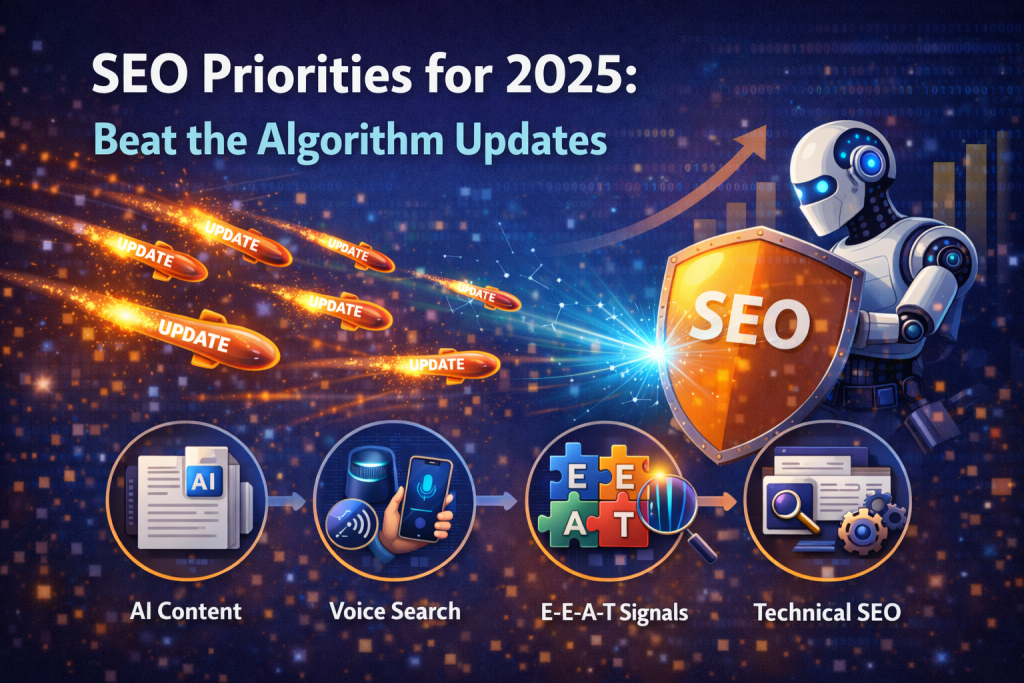
As we navigate 2025, Google’s search algorithm has become increasingly sophisticated, prioritizing artificial intelligence integration, user intent understanding, and content authenticity over outdated keyword-stuffing tactics. With three major core updates and one spam update confirmed throughout 2025 (as detailed in Google’s December 2025 Core Algorithm Update), websites must adapt their SEO strategies to maintain visibility and competitiveness in search results. The stakes are higher than ever. Websites relying on thin content, AI-generated copy, or aggressive link-building practices have experienced significant ranking declines, while those emphasizing original, user-focused content aligned with Google’s E-E-A-T (Experience, Expertise, Authoritativeness, and Trustworthiness) guidelines have thrived. This comprehensive guide outlines the critical SEO priorities for 2025 and actionable strategies to help your website beat algorithm updates.
1. Consistent Publication of High-Quality, Satisfying Content (23% Weight)
Content quality has become the dominant ranking factor in 2025, accounting for 23% of Google’s ranking weight—a significant increase from previous years. As documented in The 2025 Google Algorithm Ranking Factors, Google’s March 2025 core update and subsequent releases have consistently rewarded websites publishing comprehensive, helpful content that genuinely solves user problems.
The shift toward “satisfying content” reflects Google’s commitment to delivering results that users actually find valuable. Core updates help Google refine its understanding of whether content genuinely answers a user’s problem or exists solely to rank.
Conduct a Content Audit: Review your existing pages and identify thin, outdated, or low-value content. Use tools like Meta Tags Analyzer to assess your content’s optimization level.
Create Depth-Focused Articles: Target long-form content (1,200–2,000+ words) that thoroughly addresses user questions. Include step-by-step guides, examples, FAQs, and real-world applications rather than surface-level overviews. SEOFreeGenius’s beginner guides demonstrate how comprehensive content ranks higher.
Adopt a People-First Approach: Write for users first, search engines second. According to Google’s guidance on creating helpful, reliable, people-first content, address the actual pain points and questions your audience has, rather than inserting keywords artificially.
Establish a Consistent Publishing Schedule: Maintain regular content updates. Websites publishing consistently relevant, fresh content perform better in rankings and Google Overviews.Internal Linking Strategy: Link related articles together logically. For example, if you offer a plagiarism checker tool, link to blog posts about content originality, citation best practices, and academic integrity from your main site at SEOFreeGenius.
2. Search Intent Mastery (Emerging Priority)
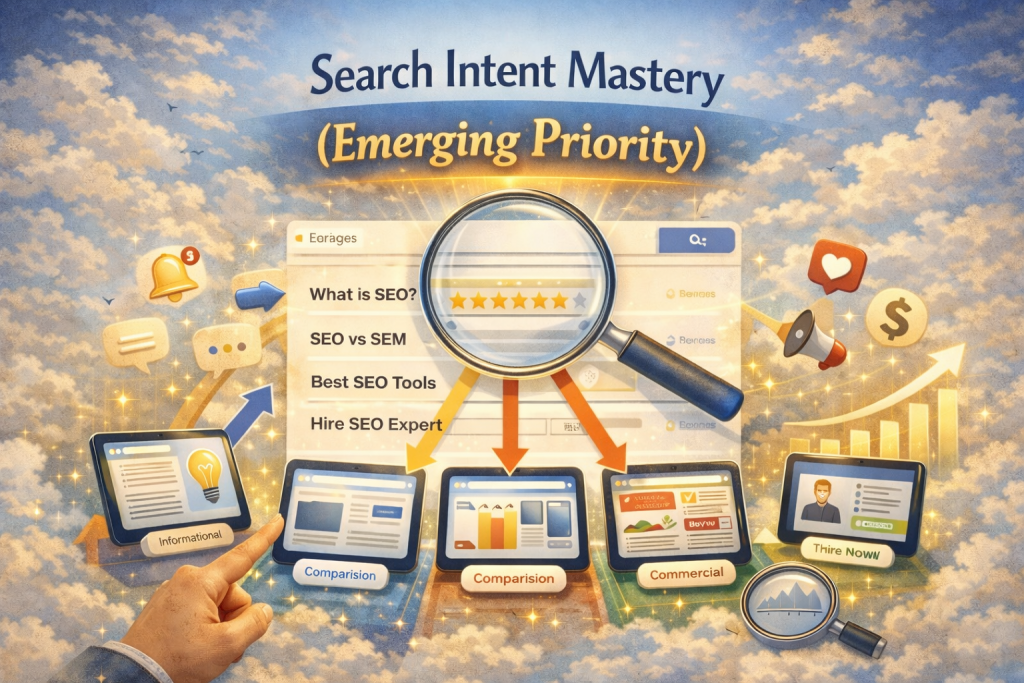
Google’s algorithm has evolved from simple keyword matching to sophisticated intent analysis. The 2025 updates demonstrate that Google now evaluates whether content truly answers what users are searching for, analyzing dwell time, bounce rates, and user interactions to refine intent interpretation.
Search intent is not static—it evolves with user behavior, phrasing, and context. Whether users want information, comparisons, solutions, or expert guidance significantly impacts which content ranks, as explained in SEOFreeGenius’s guide to how Google ranks websites.
Map Search Intent Types: Categorize your target keywords as informational (learning), navigational (finding), commercial (research before purchase), or transactional (buy/action).
Align Content to Intent: Ensure each page directly addresses the specific intent behind your target keyword. A “free SEO tools” page should list and describe tools for users actively seeking resources—not a sales pitch.
Optimize for Featured Snippets: As AI Overviews now trigger in approximately 20% of queries (doubled from 10% in mid-2025), structure content to appear in snippets by:
- Including clear definitions and bullet-point summaries
- Providing step-by-step instructions
- Featuring comparison tables and data
- Using schema markup to help Google parse information
Use Tools to Understand User Behavior: Monitor your Google Search Console performance data, looking at queries driving impressions but low click-through rates (CTR). Refine titles and meta descriptions to better match user intent using Meta Tags Analyzer.
3. E-E-A-T Signals and Content Authenticity (13% Niche Expertise)

Google’s ongoing E-E-A-T refinement emphasizes Experience, Expertise, Authoritativeness, and Trustworthiness more than ever. The 2025 algorithm increasingly penalizes AI-generated spam content while rewarding verified expertise, original research, and authentic authorship.
This refinement is particularly important for Your Money Your Life (YMYL) topics—health, finance, legal, and safety content—where expertise credentials matter significantly. As Google has further refined its ability to assess AI-generated content, human expertise has become indispensable.
Establish Author Credibility:
- Include author bios with credentials and experience on your website
- Link to your About/Contact page to build trust signals
- Cite recognized industry experts and link to authoritative external sources like Backlinko’s comprehensive ranking factors guide
Demonstrate Original Research and Experience:
- Publish case studies showing real results
- Share proprietary data and insights not available elsewhere
- Reference personal experience and testing with specific examples
- Update content regularly when new information emerges—freshness now weights 6% of ranking factors
Build Authority Through External Validation:
- Earn backlinks and mentions from relevant, authoritative sites
- Partner with recognized experts in your field
- Contribute to industry publications
- Monitor and respond to brand mentions using Backlink Checker
Verify Content Authenticity:
- Avoid AI-generated content that lacks original insights
- Use AI as a writing aid (research, outlining, editing) rather than the primary creator
- Clearly disclose when AI tools assist with content creation if applicable
Focus on unique value that human expertise provides, as emphasized in E-E-A-T guidelines for 2025
4. Core Web Vitals and User Experience (12% Searcher Engagement)
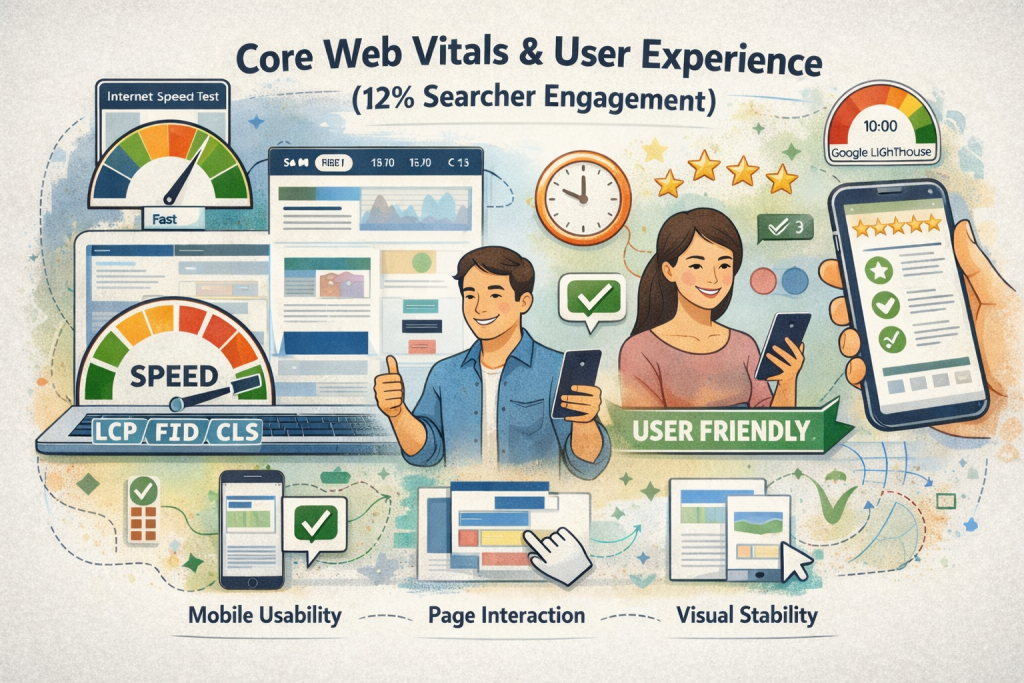
Core Web Vitals have evolved significantly in 2025. New metrics include Interaction Readiness (IR) measuring how quickly users can interact with page elements, Cumulative Layout Shift 2.0 (CLS 2.0) evaluating unexpected layout shifts, and Mobile Experience Score (MES)—a new ranking factor prioritizing seamless mobile browsing.
Mobile-friendliness now accounts for 5% of ranking weight, while page speed influences rankings both directly and indirectly through user engagement metrics.
Measure Your Core Web Vitals:
- Use Google PageSpeed Insights to identify current performance
- Monitor Core Web Vitals in Google Search Console monthly
- Target: Largest Contentful Paint (LCP) under 2.5 seconds, First Input Delay (FID) under 100ms, Cumulative Layout Shift (CLS) under 0.1
Optimize Site Speed:
- Enable Gzip compression in .htaccess to reduce data transfer by up to 90%
- Implement browser caching to serve static files faster
- Use a Content Delivery Network (CDN) like Cloudflare to reduce server load
- Minimize render-blocking JavaScript and CSS
- Optimize images with compression and lazy loading
- Use SEOFreeGenius tools to audit and monitor speed improvements
Ensure Mobile Responsiveness:
- Ensure your site functions perfectly on smartphones, tablets, and desktops
- Test using Google’s Mobile-Friendly Test
- Prioritize touch-friendly interface elements with sufficient spacing
- Ensure readability without horizontal scrolling
Fix Layout Shifts:
- Specify dimensions for images and embedded content
- Avoid inserting ads or content that causes unexpected layout changes
- Test animations and transitions across devices
Improve Searcher Engagement:
- Reduce bounce rates through compelling, relevant content
- Increase session duration by internal linking—internal links now weigh 1% of ranking factors
Add related article links internally—for instance, linking from an article about content optimization to your Plagiarism Checker or Word Counter tool
Don’t guess your scores. Test your Core Web Vitals instantly with our [Page Speed Checker] to see exactly what Google sees.
5. Technical SEO Excellence (Crawlability and Indexation)
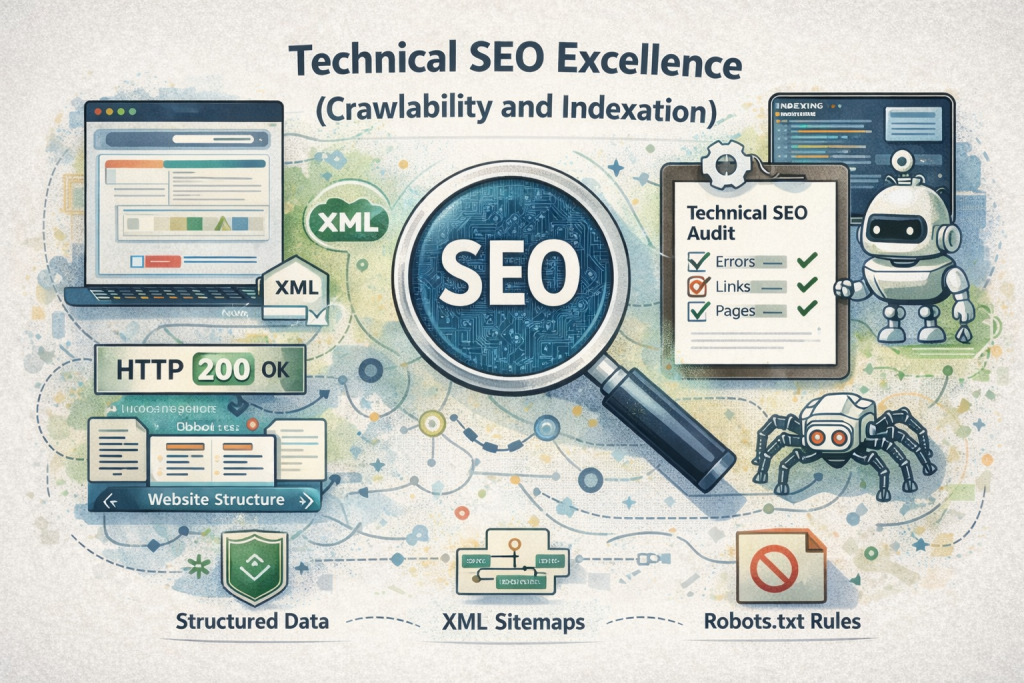
Technical SEO remains the foundation of ranking success. Even with exceptional content, pages that Google cannot crawl, index, or serve properly won’t rank. The December 2025 updates emphasized technical excellence as a prerequisite for visibility.
Technical SEO becomes particularly important for shared hosting environments where crawl efficiency is critical with limited server resources.
Optimize Crawlability:
- Create and submit an XML sitemap to Google Search Console, ensuring Google discovers all important pages
- Use Robots.txt Generator to block non-essential folders (like /admin/) while pointing bots to your sitemap
- Ensure every important page is reachable through internal links from your homepage, such as linking from your main SEOFreeGenius homepage to key tool pages like the Plagiarism Checker and Word Counter
- Fix 404 errors and use canonical tags to avoid duplicate content
Implement Proper Redirects:
- Use 301 redirects to handle URL changes and preserve link equity
- Use the Redirect Generator feature in SEOFreeGenius for clean redirect implementation
- Avoid redirect chains
Ensure HTTPS and Security:
- Implement SSL/TLS certificates (HTTPS is a confirmed ranking factor weighing 2% according to 2025 data). firstpagesage
- Ensure your entire site redirects from HTTP to HTTPS
- Maintain strong password practices and security protocols to signal trustworthiness
Monitor Meta Tags:
- Use Meta Tags Analyzer to ensure titles and descriptions are optimized
- Ensure titles include your main keyword and are under 60 characters
- Write meta descriptions that answer “What is this page?” and “Why should I click?” in 1-2 sentences
- Monitor your tag implementation monthly
Leverage Structured Data:
- Implement schema markup (JSON-LD) for your content type (Article, FAQPage, SoftwareApplication, Organization, etc.)
- Help Google interpret your content more effectively through structured data
- Test implementation using Google’s Rich Results Test
For Shared Hosting Optimization:
- Upgrade to PHP 8+ and enable OPcache in cPanel for faster execution. SEOFreeGenius Blog
- Clean databases regularly and limit revisions in WordPress settings to reduce database overhead
- Combine CSS/JS files to minimize render-blocking resources
- Target under 50 HTTP requests per page. SEOFreeGenius Blog
6. Backlinks and Authority (13% Weight)
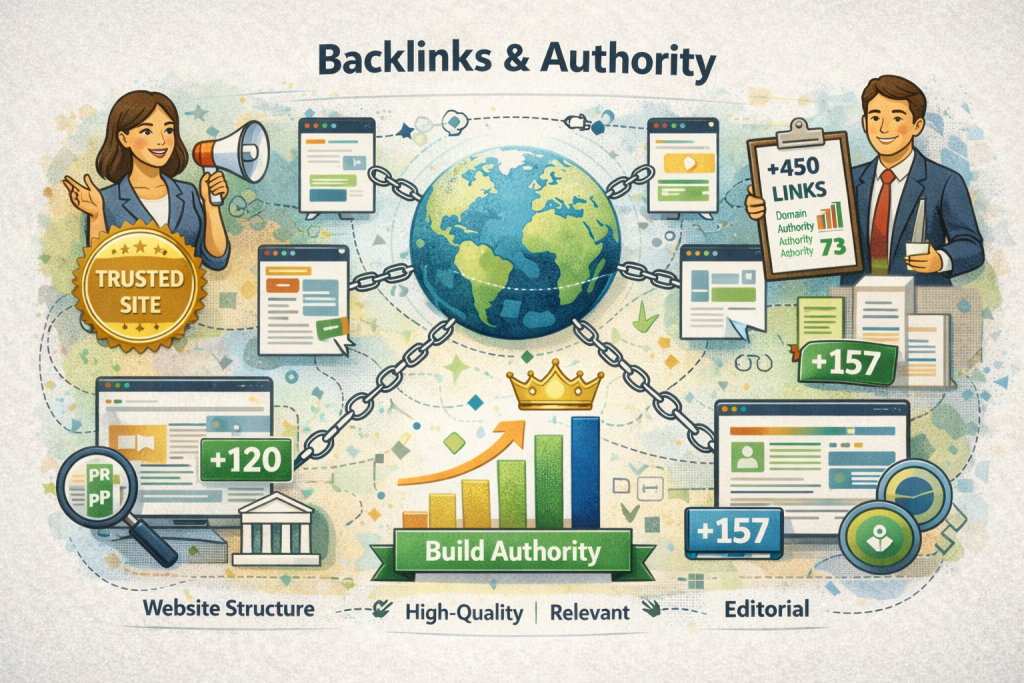
Backlinks remain a critical ranking factor in 2025, accounting for 13% of ranking weight. However, Google’s algorithm now emphasizes link quality, relevance, and diversity over quantity, with the spam update targeting manipulative link-building practices.
The November 2025 update explicitly cracked down on low-quality links and “parasite SEO,” where reputable sites host low-quality, third-party content.
Build High-Quality Backlinks:
- Focus on earning links from relevant, authoritative websites in your industry
- Create link-worthy content: original research, case studies, comprehensive guides, and tools
- Reach out to industry publications and relevant websites for guest post opportunities
- Reference external authority: link to industry leaders like Backlinko’s ranking factors research and Google’s official search documentation
Monitor Your Backlink Profile:
- Use Backlink Checker to identify your link profile
- Identify and disavow low-quality or spammy backlinks
- Monitor competitor backlinks to find new linking opportunities
- Ensure link diversity across domains and sources—link distribution diversity now weighs 3% of ranking factors
Avoid Manipulative Linking Tactics:
- Do not participate in link farms or paid link schemes
- Avoid footer links from unrelated sites
- Disassociate from private blog networks (PBNs)
- Focus on natural, contextual links within high-quality content
Internal Linking Strategy:
- Link related pages together logically—internal links weigh 1% of ranking factors
- Use descriptive anchor text that hints at the linked page’s content
- Link from high-authority pages to newer content to boost visibility
- Ensure proper link distribution—don’t concentrate all links on one page
7. Keyword Optimization and Meta Elements (14% Weight)
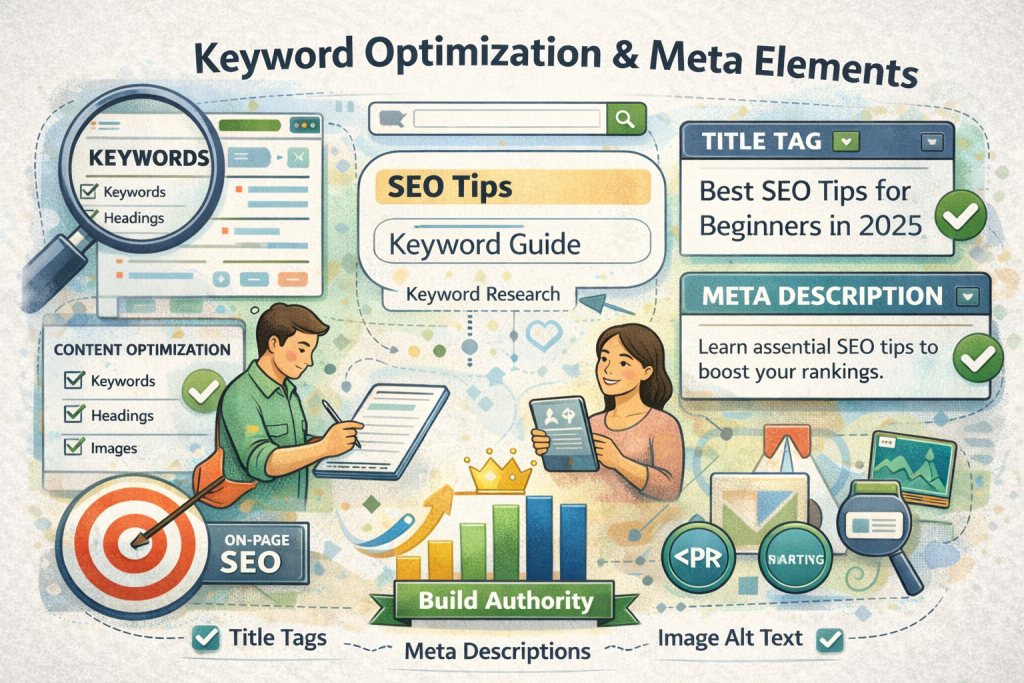
Keywords in meta title tags weigh 14% of ranking factors in 2025—a relatively high weight compared to other on-page factors. However, keyword placement must feel natural and serve the user, not artificially stuffed for ranking.
Keyword in meta descriptions weights just 1% (combined with 23 other factors), indicating that while optimization matters, user-focused descriptions are more important.
Conduct Keyword Research:
- Use AI Keyword Cluster Ideas to group related keywords into topic clusters
- Identify primary keywords (one per page) and related secondary keywords
- Use Keyword CPC Calculator to understand keyword value for your content strategy
- Target long-tail keywords with clear intent to reduce competition
Once you target a keyword, track its movement. Use our [Keyword Position Checker] to see if your ranking improves over time.
Optimize Title Tags:
- Place your main keyword at the beginning of the title
- Keep titles under 60 characters to avoid truncation in search results
- Include benefit or curiosity element: “Free SEO Tools – 50+ Online Tools for Bloggers”
- Make each title unique across your entire site
Write Compelling Meta Descriptions:
- Include your main keyword naturally
- Answer “What is this page?” in 1-2 sentences
- Add a call-to-action or reason to click
- Keep descriptions between 120-160 characters
- Use Meta Tags Analyzer to review implementation
Natural Keyword Placement in Content:
- Include primary keyword in H1 heading and first 100 words
- se keyword 1-2 times per 100 words of content (approximately 1-2% density). SEOFreeGenius Blog
- Write naturally—never force keywords into sentences
- Use related keywords and synonyms to demonstrate topic comprehension
- Ensure content reads naturally for human readers first, search engines second
Use Clean, Readable URLs:
- Include your primary keyword in the URL slug
- Use hyphens to separate words (not underscores or special characters)
- Prefer: https://example.com/free-seo-tools/ over https://example.com/?id=123
- Keep URLs concise and descriptive
8. Content Freshness and Updates (6% Weight)
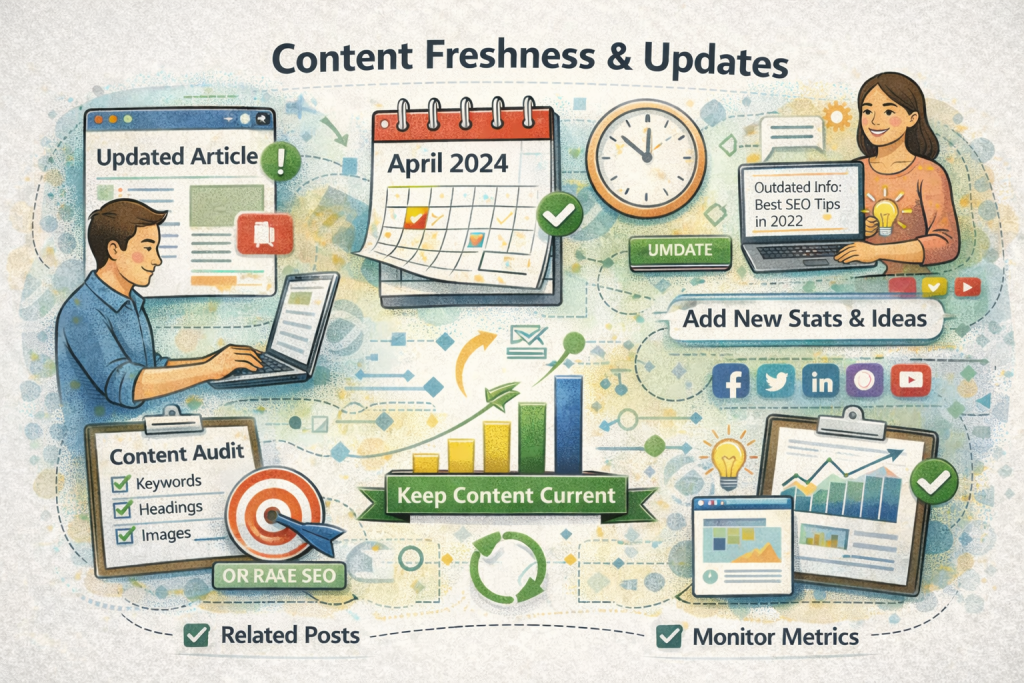
Content freshness weights 6% of ranking factors in 2025. While not as dominant as satisfying content, freshness signals to Google that your site maintains current information and adapts to evolving search intent.
The distinction between freshness and recency is important: you don’t need to publish new content constantly, but you should update important pages when information changes or best practices evolve.
Refresh High-Performing Content:
- Identify pages in your Google Search Console Performance report that sit around positions 5-20 with decent impressions
- Update these pages with new examples, recent statistics, and current best practices
- Add publication and update dates (using schema markup) to signal freshness
- Re-verify links and citations to ensure accuracy
Update Content Strategically:
- When tools change, screenshots, or methodologies evolve, update relevant articles
- Add new sections addressing emerging questions or trends
- Keep case studies and statistics current
- Review and update your main homepage and key pages quarterly
Need to refresh an old post quickly? Use our [Article Rewriter] to give your outdated content a fresh spin while keeping the core message.
Create Topic Clusters with Fresh Content:
- Build topic clusters around core subjects with multiple, related articles
- For example, create a cluster on “Free SEO Tools” linking from your main tools page to articles about plagiarism checking, word counting, and other specific tools
- Update cluster articles simultaneously to signal comprehensive topical authority
Monitor Industry Changes:
- Subscribe to industry publications and Google’s official announcements
- Update content when Google releases core updates or algorithm guidance
- Reflect emerging trends and user questions in your content updates
9. Combat Google AI Overviews (Emerging Challenge)
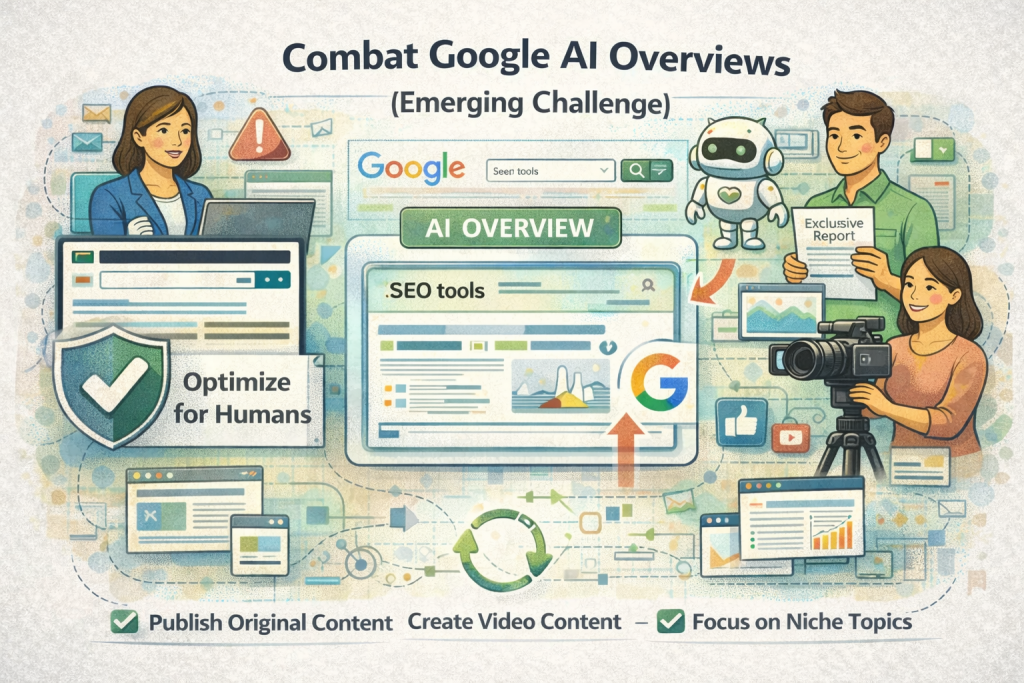
AI Overviews doubled from approximately 10% to 20% of queries between March and June 2025. These AI-generated summaries appear at the top of search results, pulling information from multiple sources, potentially reducing click-through rates to individual websites.
While challenging for traffic, AI Overviews also create opportunities for visibility if your content is selected as source material.
Optimize for AI Snippet Selection:
- Use clear, concise language with bullet points and numbered lists
- Include well-defined answers to frequently asked questions (use FAQ schema)
- Provide data, statistics, and comparisons that AI systems can extract and synthesize
- Ensure your content is technically well-structured with proper headings and semantic HTML
Maintain Core Search Visibility:
- Focus on building topical authority to rank for multiple keyword variations
- Create comprehensive content that covers topics in depth, making your site a go-to reference
- Earn high-quality backlinks to improve overall domain authority using strategies from Backlinko’s research
- Build internal linking networks to share link equity across related pages
Target Question-Based Queries:
- Create content around specific questions your audience asks
- Use natural language and question-format subheadings
- Provide concise, definitive answers within the first 100-200 words
- Use schema markup to explicitly structure questions and answers
10. Practical Implementation Timeline
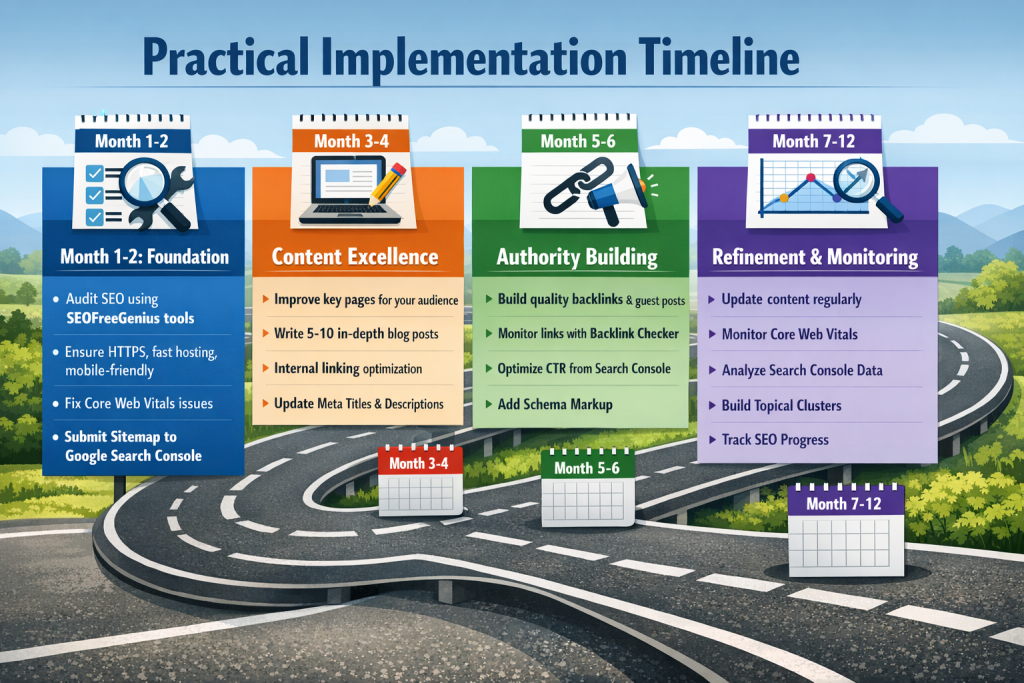
- Audit your technical SEO using free tools from SEOFreeGenius
- Ensure HTTPS, fast hosting, mobile-friendliness, and working sitemap/robots.txt
- Fix critical Core Web Vitals issues
- Submit sitemap to Google Search Console
- Publish or improve key pages targeting your primary audience
- Create 5-10 in-depth blog posts addressing user intent questions
- Implement internal linking between related content
- Update meta titles and descriptions using Meta Tags Analyzer
- Build high-quality backlinks through content partnerships and guest posts
- Monitor backlinks using Backlink Checker
- Optimize content snippets and CTR based on Search Console data
- Implement schema markup for your content type
Month 7-12: Refinement and Monitoring
- Update high-performing content regularly
- Monitor Core Web Vitals continuously
- Analyze Search Console data monthly for optimization opportunities
- Build topical clusters and expand internal linking
- Track your SEO progress using SEOFreeGenius tracking tools
Conclusion
Beating Google’s 2025 algorithm updates requires a comprehensive, people-first approach centered on satisfying content, technical excellence, and authentic authority. The shift toward AI integration, enhanced intent understanding, and E-E-A-T validation means that old SEO tactics—keyword stuffing, thin content, manipulative linking—no longer work.
Instead, successful websites in 2025 focus on:
- Creating genuinely helpful, in-depth content that solves real user problems
- Understanding and targeting search intent with precision
- Building authentic authority through expertise, experience, and trustworthiness
- Maintaining technical excellence with fast, mobile-friendly, crawlable sites
- Earning high-quality backlinks from relevant sources
- Optimizing user experience through Core Web Vitals and mobile-first design
- Keeping content fresh while avoiding constant republishing for its own sake
Use the free tools and resources available at SEOFreeGenius—including Meta Tags Analyzer, Backlink Checker, Robots.txt Generator, Plagiarism Checker, Word Counter, and AI Keyword Cluster Ideas—to audit, optimize, and monitor your SEO progress continuously. The websites that will dominate search in 2025 and beyond are those that genuinely help their audience first, optimize for search engines second, and adapt quickly as Google’s algorithm evolves. Start implementing these priorities today, and your website will be well-positioned to rank higher, attract more organic traffic, and beat the algorithm.