
- Published: April 18, 2026
- Author: Samir Hassan
- Reading time: ~12 minutes
Introduction: Free Tools Are Great. Bills Still Need to Be Paid
If you run a free SEO tools site, you already know the paradox:
- Users love that everything is free
- Your server bill, time, and energy are definitely not free
In 2026, there are thousands of tool sites offering keyword checkers, backlink analyzers, and speed tests at no cost. Most of them struggle to make meaningful revenue—not because the tools are bad, but because the monetization strategy damages the user experience. [news.designrush] [MKDM]
Pop‑up hell, layout‑shifting ads, forced sign‑ups just to see results—users hate all of that. Core Web Vitals and Google’s “helpful content” guidance also mean these experiences are less likely to be rewarded with strong search visibility. [developers.google] [semrush] [searchengineland] [developers.google]
This guide is about a different way to do it. I’ll walk through how a free tools site (like seofreegenius.com) can:
- Build real authority with content
- Layer in multiple, low‑friction revenue streams
- Protect user trust so people actually keep coming back
If you want context on how this fits into your overall SEO strategy, pair this with:
- “Free SEO Tools Checklist 2026_How I Actually Use Them to Grow Traffic”
- “How to Turn a Free SEO Tools Site from 0 to 10K Clicks Using Only Search Console Data”
1. Pillar One: Become an Educator, Not Just a Tool Shelf
Free tools get people in the door. Educational content is what turns them into long‑term users and customers. [searchengineland] [elementor]
Think of your tools as “what” and your content as “how” and “why”.
1.1 Build topic clusters around your tools
On seofreegenius.com, this shows up as:
Beginner foundations
- “SEO for Complete Beginners: How Google Finds and Ranks Your Website”
- “On-Page SEO Checklist for Small Websites (You Can Do This in One Afternoon)”
Technical support
Growth and strategy
- “5 Crucial Changes in SEO for 2026 and How to Adapt Now”
- “Leveraging Google AI Trends for Better Rankings in 2026”
Each article naturally references relevant tools; Page Speed Checker, XML Sitemap Generator, Robots.txt Generator, Keyword Position Checker, Backlink Checker—as part of the solution, not as hard sells.
You can formalize this structure with the ideas in “Building Topic Clusters Around Your SEO Content: The Complete Authority‑Building Guide”. Industry guides on AI search and GEO echo the same principle: depth + internal structure is key to visibility in both classic search and AI results. [searchengineland] [pureseo]
1.2 Why this works
- You rank for more long‑tail, problem‑based queries instead of just tool brand terms. [elementor] [searchengineland]
- Users trust you because you’re actually helping them do the work, not just pushing buttons. [news.designrush]
- It’s natural to mention your own tools inside the guides as part of the workflow.
- You earn links from other sites referencing your explanations, not only linking to individual tools. [MKDM]
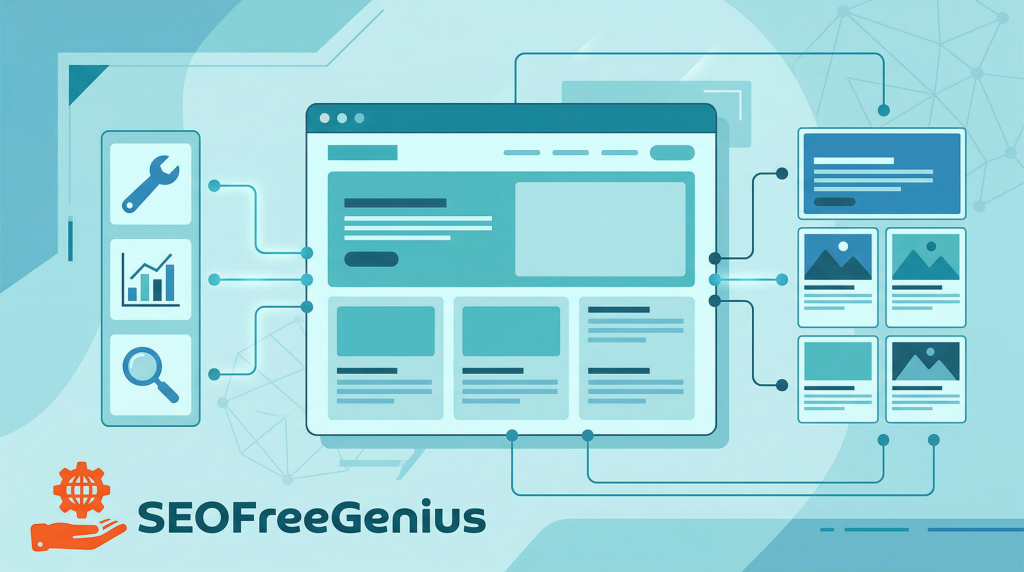
2. Pillar Two: Multiple Revenue Streams Without Trashing UX
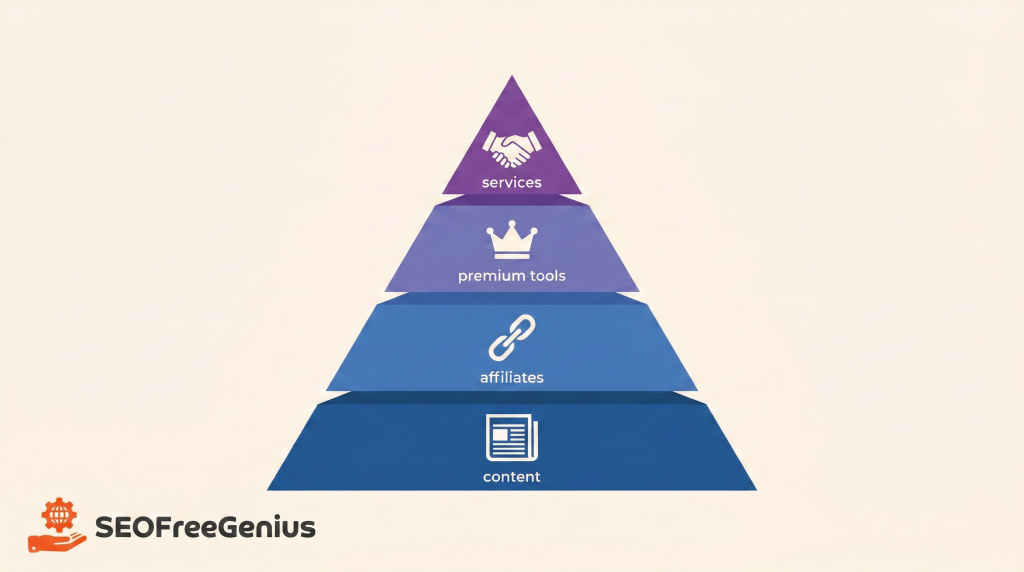
Banner ads alone almost never build a healthy business. They usually:
- Pay poorly unless you have huge traffic
- Encourage you to cram ads everywhere
- Slow the site down and hurt rankings [digitalscouts] [news.designrush] [searchengineland]
Instead, think in layers.
2.1 Freemium: power features for power users
Keep your core tools truly free (e.g., basic keyword checks, simple backlink lookups), then add optional upgrades for people who need more. [semrush] [indexly]
Examples of freemium features:
- Higher limits (more queries per day, more rows per report)
- Saving and comparing results over time
- Export to CSV / API access
- Extra metrics (historical data, more filters)
Most casual users will stay free users forever—and that’s fine. Agencies, consultants, and in‑house SEOs are usually happy to pay a reasonable monthly fee if it genuinely saves them hours. [overthinkgroup]
2.2 Affiliate recommendations that actually make sense
You’re already writing about hosting, speed, content, and technical SEO. That’s a natural place to recommend:
- Good hosting providers, CDNs, and caching plugins
- Premium keyword tools or suites (Semrush, Ahrefs, etc.)
- Education (courses, books, memberships) [sintra] [semrush]
The key is to only recommend tools you’ve actually tested and to plug them into articles where they logically belong. Best‑practice affiliate and AI‑SEO guides consistently stress that relevance and authenticity are what keep conversions high and trust intact. [trendchaska] [heyprospekt] [digitalscouts]
On your own site, this can connect to:
- “Technical SEO on Shared Hosting and Budget Sites” for hosting/CDN partners
- “Word Count Optimization Guide: 2024 SEO Blueprint” for writing tools and editors
- “Real‑World SEO Fixes: 5 Changes That Moved Our Pages from Page 2 to Page 1” for practical toolkit stacks
2.3 Your own services
As your content and tools demonstrate expertise, some users will want help rather than DIY. That’s where services come in: [news.designrush]
- 1:1 SEO consulting
- Technical SEO audits for small sites
- Content strategy / topic cluster planning
- Done‑for‑you implementations (e.g., speed fixes, internal linking)
Your free tools and guides become a “live portfolio” that proves you know what you’re doing, which is exactly how many agencies and consultants now position themselves in the era of AI search. [MKDM] [searchengineland]
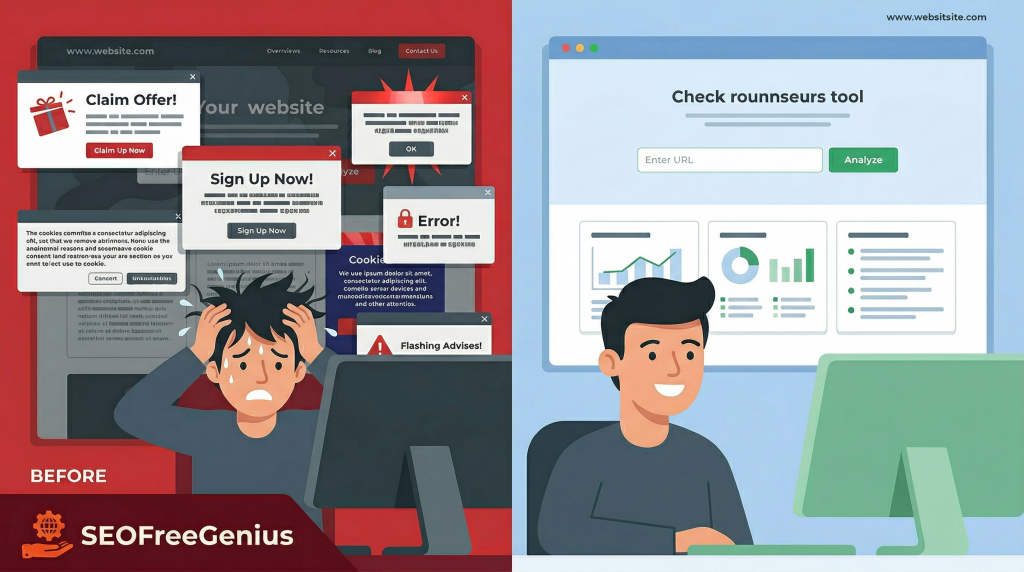
3. Pillar Three: Design UX Around Trust (Not Ad Impressions)
This is where most free tool sites fall apart.
3.1 Non‑negotiables for user experience
From both your own experience and many UX/SEO case studies, a few rules keep coming up: [developers.google] [searchengineland] [semrush]
- No paywalls on core tools. That’s your magnet—don’t lock it.
- No full‑screen pop‑ups on page load. Let people use the tool first.
- No ads above the tool input or on top of results. Sidebar or below the fold is fine.
- No auto‑play audio or video. Ever.
Keep pages fast and stable: PageSpeed Insights and Google’s Core Web Vitals documentation, plus your own Website Management tools on seofreegenius.com, will tell you if ads or scripts are harming LCP, CLS, or INP. [developers.google] [semrush]
You cover a lot of this in:
- “How to Maximize Site Speed on Shared Hosting”
- “Fix 404 Errors Fast: A Complete Guide to Protecting Your SEO Rankings”
- “How to Fix Indexing Problems in Google Using XML Sitemaps and Free Tools”
3.2 Clear limits, no surprises
If your free tier has limits (e.g., 5 queries/day), say so upfront. Users are fine with reasonable limits; they hate hidden ones.
Transparent UX + clear communication keeps you aligned with Google’s guidance on helpful content and avoids dark patterns that AI and human reviewers increasingly call out. [heyprospekt] [seosherpa] [developers.google]
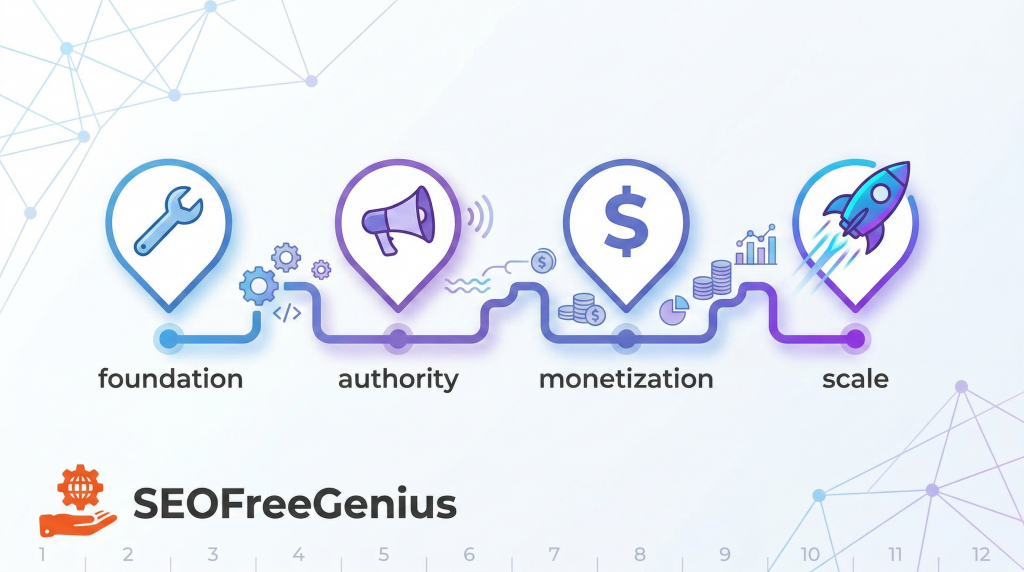
4. A 12‑Month Roadmap to a Real Business
Let’s make this concrete. Here’s a simplified version of the roadmap, focused on what’s realistic for a one‑person or small team.
Months 1–3: Fix the basics and publish real guides
- Make sure your core tools are fast, bug‑free, and easy to use.
- Publish a beginner content cluster:
- SEO fundamentals, on‑page basics, technical SEO on cheap hosting
- Link those guides naturally to your tools (keyword utilities, meta tools, site speed, XML sitemap, robots.txt).
- Set up Google Search Console, Analytics, and basic monetization (light AdSense, 2-3 affiliate programs that actually fit your content). [searchenginejournal] [digitalscouts] [developers.google]
Months 4–6: Build authority and test monetization
Months 4–6: Build authority and test monetization
- Publish more intermediate guides:
- Keyword research with free tools
- Fixing indexing issues
- Real‑world SEO case studies using your own data
- Start weaving in affiliate recommendations where they add genuine value.
- Beta‑test freemium features for your most used tools with a small group of engaged users. [news.designrush]
Months 7–12: Launch services and a simple freemium tier
- Offer SEO audits, consulting, or content strategy to your most engaged users or email subscribers.
- Launch a paid tier for a few tools with:
- Consider light, clearly‑labeled sponsored content with vendors your audience already knows. [MKDM] [news.designrush]
At this stage, many sites can realistically reach a mix like:
- Majority of traffic and revenue from content + affiliates + services
- Smaller portion from display ads and freemium tools [digitalscouts]
5. Common Mistakes Free Tool Sites Make (and How to Avoid Them)
You’ve already seen a lot of these in the wild—and probably on your own journey.
Mistake 1: Ads first, users second
Loading up pages with ads, pop‑ups, and interstitials might give a short‑term bump but usually kills:
- User trust
- Repeat usage
- Core Web Vitals and rankings [searchengineland] [semrush] [news.designrush]
Fix: cap ads, keep them out of the way, and let tools be the hero.
Mistake 2: Random content with no plan
Publishing scattered SEO tips without a clear topic structure dilutes authority and confuses both users and AI systems. [searchengineland] [MKDM]
Fix: Build topic clusters around:
- Free tools
- Indexing and technical fixes
- AI/SEO trends
- Content refresh and on‑page optimization
Your own topic cluster guide and content refresh playbook give a clear system for this.
Mistake 3: One revenue stream only
Relying only on banner ads or only on affiliates is risky.
Fix: Mix:
- Content + search traffic
- Affiliates that make sense
- Light freemium
- Consulting/services
This kind of diversified model is what many 2025–26 monetization and AI‑SEO strategy pieces recommend for tool and SaaS sites. [sintra] [digitalscouts] [indexly] [news.designrush]
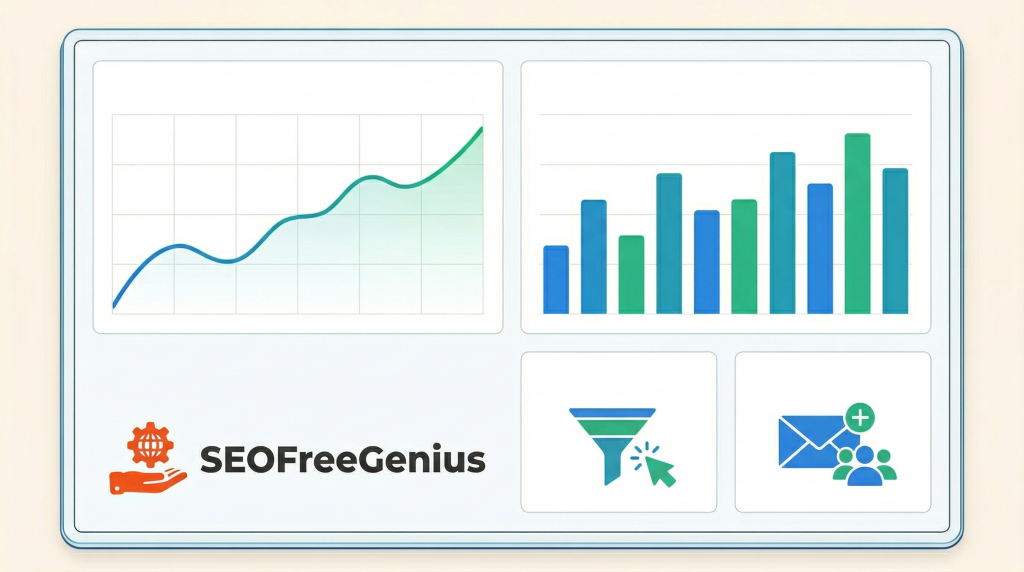
6. Measure What Matters (So You Don’t Optimize the Wrong Things)
Instead of obsessing over vanity metrics, track:
- Organic traffic and rankings – via Search Console
- Tool usage – which tools and flows users love the most
- Revenue per visitor – rough measure of monetization health
- Email list growth and engagement – future revenue potential [developers.google] [digitalscouts]
Your own toolset can help here:
- Domain Authority Checker, Domain Age Checker, Blacklist Lookup, etc., to keep an eye on overall domain health (seofreegenius.com tools).
- Speed and performance tools to ensure monetization changes don’t slow the site down. [semrush]
Conclusion: Free + Helpful + Honest = A Real Business
Turning a free SEO tools site into a sustainable business isn’t about squeezing every cent out of every visitor. It’s about:
- Being genuinely useful with your tools and content
- Monetizing in ways that align with user success
- Playing a long game where trust is your main asset [searchengineland] [news.designrush]
If you focus on:
- Building an educational content hub around your tools
- Layering multiple, user‑friendly revenue streams
- Protecting the user experience at all costs
you can grow from “nice free site” to “business you can rely on” without ever turning your users into ad targets or hostage to paywalls.
Samir H. M. is the creator of [seofreegenius.com], offering 66+ free SEO tools from Riyadh. He’s hands-on tested and built features like plagiarism checkers and backlink tools, plus 36 guides to help sites rank better. Practical, no-BS advice for real users.